
Woozoo Globe vs Pedestal Fan: Which Design Wins for Your Space?
When you're choosing between a compact globe design and a traditional pedestal fan, the decision often comes down to how you use your space and what kind of airflow coverage you need. We've helped thousands of customers navigate this choice, and the answer depends on whether you prioritize floor space, directional control, or whole-room circulation.
Both designs have distinct advantages, and understanding the trade-offs helps you pick the one that actually fits your daily routine. In this guide, we'll walk through airflow mechanics, footprint considerations, and practical scenarios where each design excels.
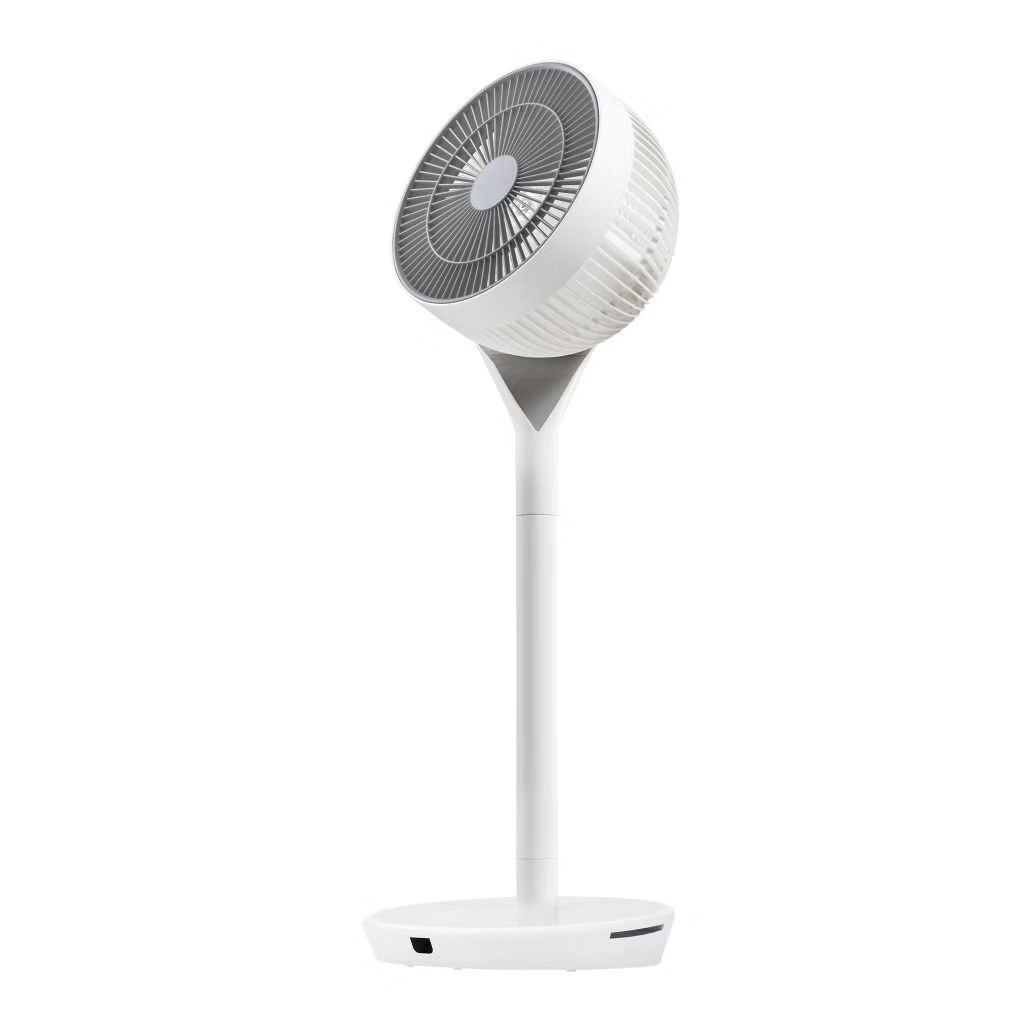
Airflow Coverage: Focused vs. Spherical Distribution
Pedestal fans deliver a tall, sweeping oscillation that moves air across an entire room in horizontal layers. This makes them ideal for large open spaces where you want consistent circulation from wall to wall.
Globe fans, by contrast, use a spherical vortex design that pushes air in a more concentrated, directional stream. The Woozoo Globe Fan Grey model, for example, creates a focused airflow column that reaches farther than many traditional fans of the same diameter, making it effective in rooms where you need to push air toward a specific corner or across a long hallway.
For rooms under 300 square feet, a globe fan’s targeted airflow often feels more immediate because it doesn’t rely on wide oscillation to reach every corner. In larger spaces, a pedestal’s height and sweep pattern can provide better overall circulation, though you may need to adjust placement to avoid dead zones near furniture.
Footprint and Placement Flexibility
A pedestal fan’s vertical pole and base take up minimal floor area, but the height can be awkward in rooms with low furniture or where you want to tuck the fan into a corner without blocking sightlines. The base itself is stable, but you’re locked into a fixed vertical reach unless you choose a model with telescoping height adjustment.
Globe designs sit lower to the ground and can be placed on a table, desk, or credenza without dominating the surface. This versatility makes them practical for home offices, bedrooms with nightstands, or workshops where floor space is already crowded. Our White Woozoo Globe Fan line fits easily on shelves or counters, and the compact footprint means you can reposition it daily without rearranging the entire room.
One often-overlooked factor is cord management. Pedestal fans with tall poles can make it harder to route the power cable neatly, especially if your outlet is low on the wall. Globe fans typically have shorter cords and lower profiles, so the cable path stays cleaner.
Noise Levels and Speed Control
Both designs can be quiet or loud depending on motor quality and blade pitch, but the way they distribute sound differs. A pedestal fan’s motor sits several feet off the ground, so the hum tends to project across the room at ear level. Globe fans place the motor closer to the surface they rest on, which can amplify vibration noise if the surface isn’t stable, but also keeps the sound lower in the room.
Speed control is where modern globe designs have caught up to pedestals. Five-speed settings let you dial in precise airflow without the abrupt jumps you get from older three-speed models. Pedestal fans often offer similar granularity, but the taller mast can introduce slight wobble at maximum speed if the base isn’t perfectly level.
According to the Wikipedia entry on air circulation devices, perceived noise depends heavily on blade design and motor type rather than form factor alone, so testing both styles at the same speed setting is the only reliable way to compare.

Aesthetic Considerations and Room Integration
Pedestal fans lean industrial or utilitarian, which works well in garages, basements, or modern minimalist interiors where exposed functional objects are part of the design language. Their height makes them visible from across the room, so they become a focal point whether you want them to or not.
Globe fans have a more compact, sculptural profile that blends into contemporary furniture arrangements. The spherical grille reads as intentional design rather than pure utility, and neutral finishes integrate easily with existing decor. If you’re staging a room for photos or guests, a globe fan on a side table is less obtrusive than a pedestal unit standing in the corner.
Color options matter here too. White and grey finishes match most paint schemes without clashing, while metallic pedestals can look dated in spaces that have moved toward warmer tones. For design-conscious shoppers, Tresanti offers complementary furniture pieces that coordinate with modern fan aesthetics, creating a cohesive look across the room.
Choosing the Right Fan Design for Your Needs
The woozoo globe vs pedestal decision isn’t about one design being objectively better—it’s about matching form factor to how you actually use your space. If you need targeted airflow, compact placement, and a design that integrates with modern furniture, a globe fan delivers those benefits without compromise. If you have a large open area and want sweeping oscillation that moves air across the entire room, a pedestal’s height and reach make more sense.
We’ve seen customers start with one style and later add the other for different rooms, because each excels in its own context. Consider your room size, furniture layout, and whether you value portability or fixed coverage, and the right choice becomes clear.
Common Questions About Globe and Pedestal Fan Designs
Globe fans excel at directional cooling and focused airflow, while pedestal fans provide broader oscillation. For rooms under 300 square feet, a globe fan's concentrated stream often feels more effective because it reaches the target area faster. Larger spaces benefit from a pedestal's wider sweep, though placement near doorways or windows can enhance circulation with either design.
Both require periodic grille cleaning, but globe fans have fewer crevices and a lower profile that makes them easier to reach without a step stool. Pedestal fans need the motor housing wiped down at height, and the pole can collect dust in seams. Either way, monthly dusting and seasonal deep cleaning keep performance consistent.
Energy use depends more on motor efficiency and speed setting than form factor. Most modern fans in both categories draw 30 to 60 watts at maximum speed. Globe fans sometimes run slightly lower wattage because of smaller blade diameter, but the difference is negligible over a billing cycle.
Globe fans work well in covered outdoor areas where they're protected from direct rain, but pedestal fans with weighted bases are more stable in windy conditions. If you're placing a fan on a patio table, ensure the surface is level and the cord is secured to prevent tipping.
Both use protective grilles, but globe fans sit lower and have no tall pole to tip over. Pedestal fans can be knocked off balance if a child or pet bumps the base, though heavier models with rubberized feet are more stable. Cord placement is critical with either design to prevent tripping hazards.
Bedrooms often favor globe fans because they fit on nightstands or dressers without taking up floor space, and the lower motor position keeps noise at mattress level rather than projecting it across the room. Pedestal fans work better in larger master suites where you want full-room circulation and have floor space to spare.